"Char gond khao, taqat aayegi" — if you grew up in a Pakistani household, you have probably heard an elder say something like this. Char gond, also known in English as gum arabic, is one of the oldest natural foods in the desi pantry. Yet walk into a market today and you will find confusion everywhere: some sellers mix it up with gond katira, others sell low-grade resin as "pure" char gond, and prices swing wildly. Is post mein hum char gond ki asal pehchan, uske sahi fawaid, aur Pakistan mein iski qeemat ka poora sach batayenge — no exaggeration, no fake health claims.
What Is Char Gond? The Truth About Gum Arabic
Char gond is the dried sap (resin) of the Acacia senegal tree, which grows in parts of Africa. When the tree bark is cut, it releases a sticky gum that hardens into translucent, amber-colored tears. These dried tears are collected, cleaned, and sold as char gond. Food scientists call it gum arabic, and it is actually one of the most widely used natural food ingredients in the world — it appears as a stabilizer and thickener (E414) in soft drinks, chocolates, and medicines.
But here is the important clarification: in South Asian tradition, "gond" refers to several different tree gums, and char gond is not the same as gond katira. Gond katira (tragacanth gum) comes from a different plant and is the one famous for swelling up in cold drinks and sherbets. Char gond is the classic desi gond — the one used in panjiri, gond ke ladoo, and traditional winter tonics.
Char Gond vs Gond Katira: Do Not Confuse Them
- Char gond (gum arabic): Amber-colored, dissolves in warm water/milk, traditionally roasted in ghee for ladoo and panjiri. Mild taste.
- Gond katira (tragacanth): Flaky white crystals that swell dramatically in cold water, used in doodh soda, sherbets, and summer coolers.
- Both are natural plant gums and both are edible — they just have different uses. If a seller cannot tell you which one they are selling, buy from somewhere else.
Char Gond Benefits: What Is Real and What Is Hype
Let us separate tradition from evidence, honestly:
1. A Natural Source of Soluble Fiber
Gum arabic is about 85% soluble fiber. Soluble fiber feeds beneficial gut bacteria (it acts as a prebiotic) and supports regular digestion — the least controversial benefit of char gond, well documented in food science.
2. Traditional Winter Tonic Use
Desi tradition roasts char gond in desi ghee until it puffs up, then mixes it into panjiri and ladoo eaten in winter. The logic is simple and honest: gond adds energy-dense calories, ghee adds more, and dry fruits add nutrition — together they make a calorie-rich winter food. It is warming comfort food, not medicine.
3. Gentle on the Stomach
When soaked, char gond forms a soothing gel. Traditionally it has been used to calm mild digestive discomfort. Modern research on gum arabic as a prebiotic fiber is promising but still developing — so treat big "miracle cure" claims on social media with healthy skepticism.
What It Is NOT
Char gond will not melt body fat overnight, will not replace medicine, and will not "cure" any disease. Koi bhi cheez jo aise daway kare, us se bachein. It is a wholesome traditional food — valuable as part of a good diet, not a magic remedy.
Char Gond Price in Pakistan
Char gond pricing in Pakistan varies more than most dry fruits because quality grades differ so much. As of 2026, retail prices for cleaned, food-grade char gond typically fall in the broad range of roughly Rs. 800 to Rs. 2,000 per 250 grams, with premium large-tear grades at the higher end and powdered or mixed grades cheaper. Uncleaned or adulterated stock can be found cheaper — but that is exactly what you should avoid. Because prices shift with import and harvest cycles, check the current rate on the live product page rather than relying on any fixed figure.
What Decides the Price?
- Tear size and clarity: Large, clean, translucent amber tears are premium; small dusty fragments cost less.
- Cleanliness: Properly cleaned, bark-free gond costs more than raw uncleaned lots.
- Adulteration risk: Cheap gond is sometimes mixed with inferior resins. A trustworthy seller is worth the price difference.
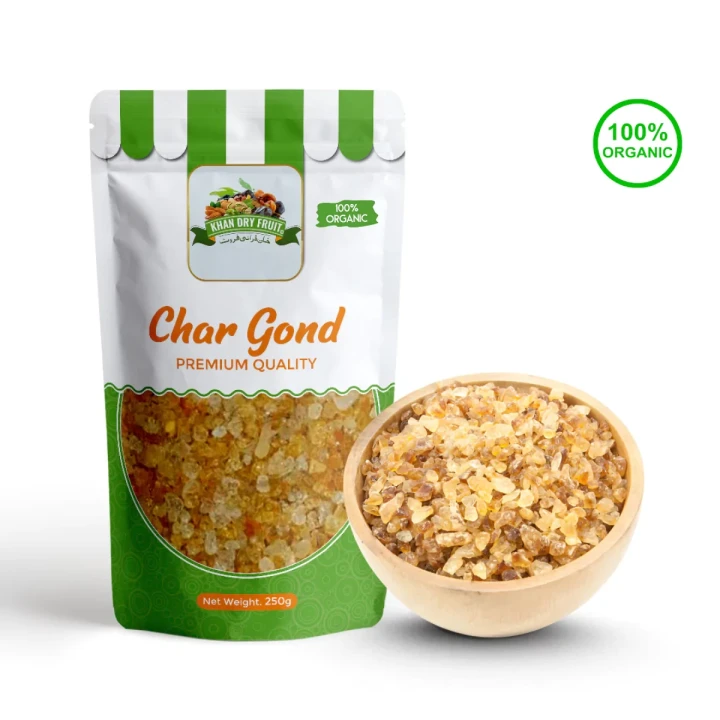
You can see our current grade and live price here: Char Gond (Cheerh) 250gm.
How to Use Char Gond at Home
1. Gond Ke Ladoo (the classic)
Roast char gond pieces in hot desi ghee until they puff up like popcorn, crush them coarsely, and mix with roasted wheat flour, powdered sugar, and chopped dry fruits. Roll into ladoo. This is the traditional winter recipe our grandmothers made.
2. Panjiri
Add puffed, crushed gond to panjiri mix (roasted semolina or flour, ghee, sugar, nuts, and seeds). A spoonful with warm milk is the classic desi winter breakfast.
3. Soaked Gond Drink
Soak a teaspoon of char gond in water overnight; it softens into a gel that can be stirred into milk or sherbet. Start with small quantities — a little goes a long way.
Storage
Keep char gond in an airtight jar in a cool, dry place. It keeps for a year or more easily since it is a dried resin. Soaked gond, however, should be used within a day or two and kept refrigerated.
Buying Guide: How to Identify Pure Char Gond
- Look: Real char gond forms irregular, glassy amber tears — translucent, not opaque or chalky.
- Break test: It snaps with a clean, glass-like fracture. Soft or waxy pieces are suspicious.
- Dissolve test: A small piece in warm water slowly dissolves into a slightly viscous, nearly clear solution. If it never dissolves or leaves heavy sediment, quality is poor.
- Smell: Should be almost odorless. A strong chemical or sour smell means contamination.
- Buy graded and packed: Prefer sealed packs from sellers who name the grade, like Char Gond (Cheerh) 250gm, over loose anonymous stock.
Frequently Asked Questions (FAQs)
Char gond kya hota hai?
Char gond (gum arabic) is the dried sap of the Acacia tree — a natural edible gum used for centuries in desi foods like panjiri and gond ke ladoo, and worldwide as a natural food thickener.
Char gond aur gond katira mein kya farq hai?
Char gond (gum arabic) is amber-colored and traditionally used in warm winter foods like ladoo and panjiri. Gond katira (tragacanth) is a different gum that swells in cold water and is used in summer sherbets and doodh soda.
What is the price of char gond in Pakistan?
As of 2026, food-grade char gond typically ranges from roughly Rs. 800 to Rs. 2,000 per 250 grams depending on tear size and cleanliness. See the live product page for the current exact price.
How do you eat char gond?
The most popular ways are roasted in ghee for gond ke ladoo and panjiri, or soaked overnight and added to milk. Always start with small quantities.
Is char gond safe for everyone?
For most people, normal food quantities are safe. Pregnant women and people on medication should check with a doctor first, as concentrated fiber can affect nutrient and medicine absorption.